
Collaboration over Competition - What can the tidepools teach us?
By Jorge Montiel-Molina
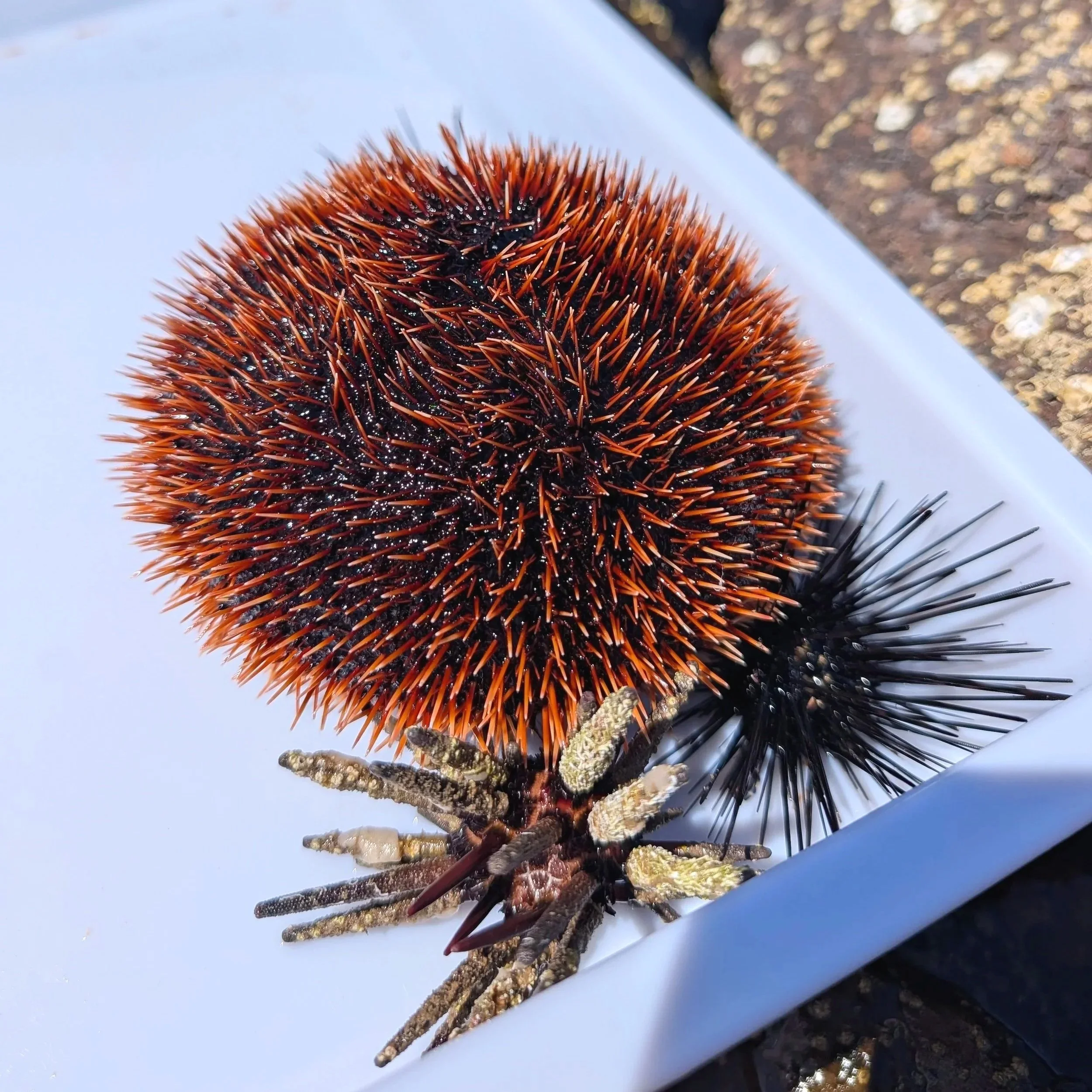
Three different species of sea urchins from the intertidal zone of the Sea of Cortez.
¿Por qué el mundo humano de hoy teme a colaborar más? ¿Por qué se recurre al conflicto armado? These are questions that I do not have an answer to.
Jorge’s Spanglish Version:
*** Note: Jorge regularly communicates in Spanglish - a mix of his native Spanish and the English he has learned since studying and working in the US. As Spanglish is his most authentic way of communicating with our multi-cultural team, we have chosen to share his blog in its original Spanglish version here. Full English and Spanish versions are available below. ***
El viaje de mi vida presente, descrito por John Steinbeck hace más de 86 años, me hace testificar la importancia de la colaboración.
Modern society has built up the paradigm of competition as a tool for success. An example I have witnessed is the Mexican education system, with kids at schools under the “competences” model, to be the best among others. But life on planet Earth has demonstrated that organismal relationships—collaboration—can expand the chances of success. For instance, the origin of complex pluricellular organisms and several unicellular eukaryotes, obtained their capacities to overcome hard environments when they work in association, or symbiotically associated with prokaryotes.
My personal collaboration with my friend Chris has opened a new door for studying environmental systems and conservation science. Quizá fue una casualidad conocernos, pero quiero darle crédito a que ambos pertenecemos a una comunidad de científicos inclusivos, y colaborativos. Un gran tipo, el buen Chris. Y luego, mis camaradas—Ivone, Rebecca, Rachel, Maxi, Adrian, Arturo y El Capitán Fransisco. I never imagined I was going to be part of an historical voyage across the aquarium of the world, El Golfo de California—El Mar de Cortez.
Atraves de la colaboracion and little funding logramos recorrer one third of the original route described at the infamous book Log of the Sea of Cortez. Escrito en 1940, por el Nobel Laureate, John Steinbeck, quien narra una historia de ciencia, amistad y colaboración, con su amigo Ed Rickets. Today, in April 2026 this history it's been rewritten with the fantastic Green Flash crew on board the Ninin.
Durante el voyage, habia muchas task to accomplish, between scientific duties, boat maintenance and crew nutrition. Sin colaboración no podríamos haber sido capaces de cumplir nuestros objetivos. Pero, bueno, ¿Qué es la colaboración?.La colaboración es la acción y efecto de trabajar en conjunto con otra u otras personas para alcanzar un objetivo común, meta o resultado. Implica participación, ayuda, contribución intelectual o física, y a menudo se define como el esfuerzo conjunto para producir algo superior a lo logrado individualmente. De acuerdo a la Real Academia de la lengua española.
As I said above in the text, life itself has taken hand from collaborative networks. Entonces, ¿Por qué el mundo humano de hoy teme a colaborar más? ¿Por qué se recurre al conflicto armado? These are questions that I do not have an answer to. Some say grief is the reason, but why is the sentiment of grief born? What does nature nos ha enseñado sobre el grief? Living organisms can be competitors and predators at any level, from microbes to animals, including humans. ¿Por que? No lo se…
Sin el escritor soñador de antaño el científico moderno no existiría. Esta es la más delicada de las colaboraciones, ya sea John Steinbeck o Julius Verne, esta simbiosis para crear el destino de la humanidad, por la realización del mismo ser humano a través de la literatura y la ciencia. Throughout the histories of these writers many scientists had based their findings. Quiero creer que sin la colaboración la evolución será difícil. No a la guerra, si a la paz y a un mundo unido por el amor y la libertad. La libertad que es un producto de la colaboración.
English Version:
The journey of my current life—described by John Steinbeck over 86 years ago—compels me to bear witness to the importance of collaboration.
Modern society has constructed a paradigm of competition as the primary tool for success. One example I have witnessed is the Mexican educational system, where children attend schools operating under a "competency-based" model, striving to be the best among their peers. Yet, life on Planet Earth has demonstrated that relationships between organisms—that is, collaboration—can vastly expand the possibilities for success. For instance, the very origins of complex multicellular organisms, as well as various unicellular eukaryotes, reveal that they acquired the capabilities to thrive in challenging environments precisely when working in partnership, or when engaged in symbiotic associations with prokaryotes.
My personal collaboration with my friend Chris has opened a new door for studying environmental systems and conservation science. Perhaps our meeting was a mere coincidence, but I prefer to credit the fact that we both belong to a community of scientists who are inherently inclusive and collaborative. Chris is a great guy—a truly good soul. And then there are my comrades: Ivone, Rebecca, Rachel, Maxi, Adrian, Arturo, and "El Capitán" Francisco. I never imagined I would become part of a historic journey through the "Aquarium of the World"—the Gulf of California, also known as the Sea of Cortez.
Through collaboration—and despite limited funding—we managed to traverse one-third of the original route described in the renowned book The Log from the Sea of Cortez. Written in 1940 by Nobel Laureate John Steinbeck, the book recounts a tale of science, friendship, and collaboration shared with his friend, Ed Ricketts. Today, in April 2026, that story is being rewritten by the fantastic crew of the Green Flash aboard the vessel Ninin.
Throughout the voyage, there were numerous tasks to be accomplished—ranging from scientific fieldwork and ship maintenance to ensuring the crew’s sustenance. Without collaboration, we would never have been able to achieve our objectives. But, then again, what exactly is collaboration? Collaboration is the act and effect of working jointly with one or more other individuals to achieve a common objective, goal, or outcome. It entails participation, assistance, and intellectual or physical contribution; it is often defined as the joint effort to produce something superior to what could be achieved individually. —According to the Royal Spanish Academy.
As I mentioned earlier in this text, life itself has embraced the power of collaborative networks. So, why does the human world of today fear collaborating more? Why do we resort to armed conflict? These are questions for which I have no answer. Some say that pain is the reason, but why does the feeling of pain arise in the first place? What has nature taught us about grief? Living organisms can be competitors and predators at every level—from microbes to animals, humans included. Why? I do not know...
Without the visionary writer of yesteryear, the modern scientist would not exist. This represents the most delicate of collaborations—whether involving John Steinbeck or Jules Verne—a symbiosis aimed at shaping the destiny of humanity and fostering the realization of the human being through the combined forces of literature and science. Many scientists have based their own discoveries upon the narratives found in the works of these writers. I want to believe that, without collaboration, evolution would be a difficult undertaking. No to war; yes to peace, and to a world united by love and freedom—that very freedom which is, itself, a product of collaboration.
Versión en Español:
El viaje de mi vida presente, descrito por John Steinbeck hace más de 86 años, me hace testificar la importancia de la colaboración.
La sociedad moderna ha construido el paradigma de la competencia como herramienta para el éxito. Un ejemplo que he presenciado es el sistema educativo mexicano, con niños en escuelas bajo el modelo de “competencias”, para ser los mejores entre otros. Pero la vida en el planeta Tierra ha demostrado que las relaciones entre organismos (la colaboración) pueden ampliar las posibilidades de éxito. Por ejemplo, el origen de organismos pluricelulares complejos y de varios eucariotas unicelulares, obtuvieron sus capacidades para superar ambientes difíciles cuando trabajan en asociación, o asociados simbióticamente con procariotas.
Mi colaboración personal con mi amigo Chris ha abierto una nueva puerta para estudiar los sistemas ambientales y las ciencias de la conservación. Quizás fue una casualidad conocernos, pero quiero darle crédito a que ambos pertenecemos a una comunidad de científicos inclusivos, y colaborativos. Un gran tipo, el buen Chris. Y luego, mis camaradas: Ivone, Rebecca, Rachel, Maxi, Adrian, Arturo y El Capitán Francisco. Nunca imaginé que iba a ser parte de un viaje histórico por el acuario del mundo, El Golfo de California—El Mar de Cortez.
A través de la colaboración y poca financiación logramos recorrer un tercio de la ruta original descrita en el infame libro Bitácora del Mar de Cortés. Escrito en 1940, por el Premio Nobel, John Steinbeck, quien narra una historia de ciencia, amistad y colaboración, con su amigo Ed Rickets. Hoy, en abril de 2026, esta historia se reescribe con la fantástica tripulación de Green Flash a bordo del Ninin.
Durante el viaje, había muchas tareas que cumplir, entre tareas científicas, mantenimiento del barco y nutrición de la tripulación. Sin colaboración no podríamos haber sido capaces de cumplir nuestros objetivos. Pero, bueno, ¿Qué es la colaboración?.La colaboración es la acción y efecto de trabajar en conjunto con otra u otras personas para alcanzar un objetivo común, meta o resultado. Implica participación, ayuda, contribución intelectual o física, y a menudo se define como el esfuerzo conjunto para producir algo superior a lo logrado individualmente. De acuerdo a la Real Academia de la lengua española.
Como dije anteriormente en el texto, la vida misma ha tomado la mano de las redes colaborativas. Entonces, ¿Por qué el mundo humano de hoy teme a colaborar más? ¿Por qué se recurre al conflicto armado? Son preguntas para las que no tengo respuesta. Algunos dicen que el dolor es la razón, pero ¿por qué nace el sentimiento de dolor? ¿Qué nos ha enseñado la naturaleza sobre el duelo? Los organismos vivos pueden ser competidores y depredadores en cualquier nivel, desde microbios hasta animales, incluidos los humanos. ¿Por qué? No lo se…
Sin el escritor soñador de antaño el científico moderno no existiría. Esta es la más delicada de las colaboraciones, ya sea John Steinbeck o Julio Verne, esta simbiosis para crear el destino de la humanidad, por la realización del mismo ser humano a través de la literatura y la ciencia. A lo largo de las historias de estos escritores, muchos científicos basaron sus hallazgos. Quiero creer que sin la colaboración la evolución será difícil. No a la guerra, si a la paz y a un mundo unido por el amor y la libertad. La libertad que es un producto de la colaboración.